
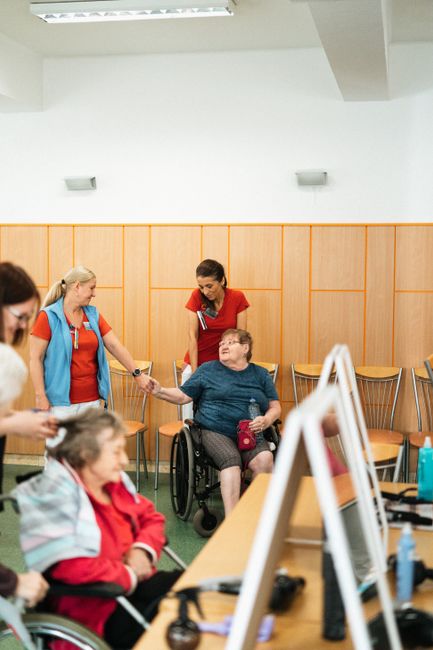
What does assisted living contribute to mental well-being?
Assisted living can support mental well-being by creating a safer, more connected, and more predictable daily environment. The goal is not simply to provide help with bathing, medications, meals, or mobility. A well-designed assisted living setting also helps residents maintain relationships, make choices, stay active, and continue activities that give life meaning.
For older adults in Lewistown, moving from a private home to a shared residential setting may bring mixed emotions. A person may feel relief about having help nearby while also grieving a familiar home, neighborhood routines, or a greater sense of independence. Mental well-being improves when those feelings are recognized rather than dismissed.
Assisted living does not prevent depression, anxiety, dementia, or other mental health concerns. It can, however, provide daily supports that make emotional health easier to monitor and strengthen.
How can assisted living reduce loneliness?
Regular social contact is one of the clearest ways assisted living can reduce isolation. Residents have opportunities to see familiar staff members, speak with neighbors, eat meals with others, and participate in planned activities without needing to arrange every interaction independently.
This matters because loneliness is not exactly the same as being alone. Some people enjoy quiet time but still feel emotionally connected. Others may be surrounded by people yet feel overlooked or unable to form meaningful relationships.
Helpful social opportunities may include:
- Shared meals and informal conversation
- Small-group games, crafts, or music programs
- Faith-based, cultural, or seasonal gatherings
- Walking groups or light exercise
- Visits with family members and friends
- Telephone or video conversations with people who live farther away
The quality of interaction matters more than the number of activities. A resident who dislikes large groups may benefit more from a quiet conversation, a small discussion, or a familiar weekly routine.
Why do routines help emotional health?
Predictable routines can reduce stress and confusion. Knowing approximately when meals, medications, activities, rest, and visits occur gives the day a recognizable structure.
This can be especially helpful for someone experiencing memory loss, vision changes, hearing difficulty, or anxiety about unfamiliar situations. A routine may also support better sleep by creating a steadier pattern of daytime activity and nighttime rest.
Predictability should not mean that every day feels rigid. Residents generally benefit when they can make reasonable choices, such as deciding what to wear, where to spend time, whether to join an activity, or when to call family. The strongest routines provide stability while preserving personal preference.
Can assisted living support a sense of purpose?
Yes. Purpose often comes from ordinary responsibilities and meaningful roles rather than major accomplishments. Residents may feel more engaged when they can contribute to the household or share knowledge and interests with others.
Examples include:
- Helping water plants or arrange flowers
- Folding towels or organizing personal items
- Sharing family recipes or local history
- Mentoring another resident in a hobby
- Participating in a resident council or discussion group
- Caring for a small indoor garden
- Writing letters, assembling photo albums, or recording memories
Activities should match a person’s abilities and interests. A program that treats every resident as if they enjoy the same games or crafts may feel impersonal. Individual preferences, past occupations, cultural traditions, and lifelong hobbies can guide more meaningful engagement.
How do physical activity and outdoor time affect mood?
Gentle physical activity can support sleep, confidence, mobility, and mood. It may include stretching, seated exercises, walking indoors, dancing, gardening, or other movement appropriate to a resident’s health and abilities.
Outdoor time may also improve a person’s sense of connection to the seasons and the surrounding community. In Lewistown, changing weather can affect how much time residents spend outside. Cold winter conditions, heat, rain, and uneven walking surfaces may require adjustments, but they do not necessarily eliminate outdoor opportunities. A safe porch, enclosed area, sunny window, or supervised walk may provide valuable contact with daylight and fresh air.
Physical activity should never be used to pressure someone into participation. Short, comfortable periods may be more beneficial than demanding exercise.
What role do meals and sleep play in mental well-being?
Nutrition and sleep are closely connected to emotional health. Regular meals can provide structure, social contact, and adequate energy for participation. A resident who eats very little, loses weight, or repeatedly skips meals may be experiencing depression, grief, dental problems, medication side effects, difficulty swallowing, or another concern that deserves attention.
Sleep changes can also signal a problem. Excessive daytime sleeping, frequent nighttime waking, early-morning anxiety, or a sudden change in sleep habits may affect mood and thinking. Noise, pain, worry, room temperature, medication timing, and nighttime confusion can all contribute.
Observing these patterns over time is more useful than focusing on a single difficult night. Families and care staff should share information when changes continue or interfere with daily life.
How is mental health monitored in assisted living?
Assisted living staff may notice changes that are difficult for family members to see during occasional visits. Warning signs can include:
- Withdrawal from activities that were once enjoyable
- Increased irritability, fear, or tearfulness
- Changes in appetite or sleep
- Confusion that is new or worsening
- Repeated expressions of hopelessness
- Neglect of personal care
- Unusual agitation or suspiciousness
- Loss of interest in conversation or visitors
These signs do not automatically mean a person has depression or another mental health condition. Pain, infection, medication changes, hearing loss, dehydration, grief, and cognitive impairment can produce similar behaviors.
A careful response includes documenting the change, considering possible physical causes, reviewing medications when appropriate, and involving qualified health care or behavioral health professionals when needed. Immediate help is necessary if a resident threatens self-harm, harms someone else, becomes severely confused, or cannot meet basic safety needs.
What should families ask about mental well-being?
Families considering assisted living should ask specific questions rather than relying only on a general description of activities. Useful questions include:
- How are residents’ interests and preferences learned?
- Are activities offered in small groups as well as larger gatherings?
- What happens if a resident stops attending activities?
- How are family visits, phone calls, and private time supported?
- How are changes in mood, sleep, appetite, or behavior documented?
- What behavioral health services can be arranged if needed?
- How are outdoor activities adapted during winter weather or extreme heat?
- Can residents influence the activity calendar or daily schedule?
It is also useful to ask a current resident what an ordinary afternoon feels like. The answer may reveal more about social connection and personal choice than a posted activity calendar.
What does healthy adjustment look like after a move?
Adjustment takes time and is rarely a straight line. A resident may participate actively one week and feel homesick the next. Important signs of progress may include becoming familiar with staff, developing one or two comfortable relationships, sleeping more consistently, joining a preferred activity, or expressing opinions about daily routines.
Mental well-being is supported when residents are treated as adults with histories, preferences, abilities, and rights—not merely as people receiving assistance. A respectful environment combines safety with choice, care with privacy, and social opportunities with the freedom to decline.
